Ingrid Betancourt holds dual French-Colombian nationality. She grew up between Bogotá and Paris, studied in France, pursued a political career in Colombia, and then endured six and a half years of captivity in the jungle. Since her release, she primarily lives in Paris. However, residing somewhere and feeling at home there are not the same thing.
Residence, nationality, belonging: three distinct notions for Ingrid Betancourt
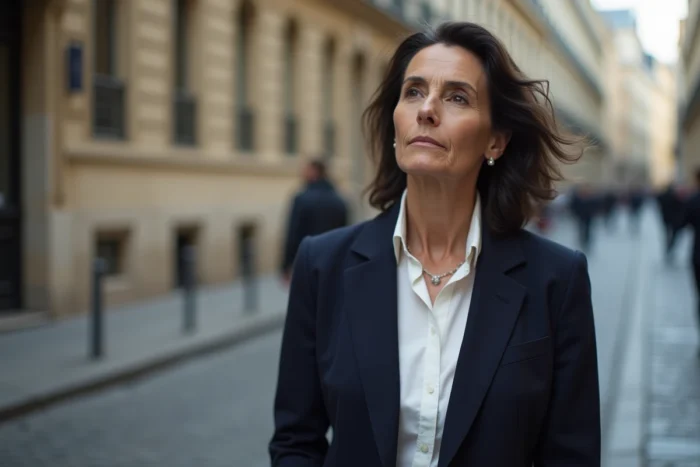
When searching for where Ingrid Betancourt currently lives, the most common answer is Paris. It has been her main address since her release in 2008. The French capital is not a circumstantial choice: Betancourt spent part of her childhood there, studied there, and established part of her family life there.
Nationality complicates the picture. She is both French and Colombian. Her father, Gabriel Betancourt, a former Minister of Education and Colombian ambassador to France, raised her in a constant back-and-forth between the two countries. Her mother, Yolanda Pulecio, a former beauty queen turned social activist, embodied the Colombian roots of the family.
Living in Paris does not mean renouncing Colombia. The third notion, emotional belonging, is one that public sources never clearly define. No recent statement from Ingrid Betancourt unequivocally designates France or Colombia as her sole country of belonging.
Ingrid Betancourt in Paris: a lasting anchor, not an exile
After her release, Betancourt could have returned to Colombia and resumed local politics. She made a different choice. Paris has become her main anchor, a place where she rebuilds her personal life away from Colombian media pressure.
This choice is explained by several concrete factors:
- France actively supported her during her captivity, with diplomatic pressure from the French government to secure her release.
- Her children partly grew up in Paris, creating a strong familial bond with the city.
- Her academic journey took place in France, where she earned her degree before returning to Colombia to enter politics.
To label this choice as exile would be reductive. Betancourt did not flee Colombia; she chose France as her base of life. The nuance matters: an exile endures their situation; she decided hers.
Colombia and political commitments: a link never severed
Living in Paris has not extinguished her activity in Latin America. Ingrid Betancourt maintains a transnational public presence, with regular interventions in Colombian political affairs.
In 2022, she ran for the Colombian presidential election. This return surprised many observers. It showed that Colombia remains a field of engagement for her, not just a memory.
Her current activity is organized between Europe and Latin America. This functioning is not that of an expatriate cut off from her roots. It is that of a political figure whose convictions remain anchored in Colombian reality, even if her daily life unfolds elsewhere.
Betancourt has dedicated her career to fighting corruption in Colombia. She founded the Oxygen Green Party, served in the House of Representatives, and then in the Colombian Senate. These commitments do not disappear just because one changes time zones.
Dual French-Colombian nationality: what it changes in daily life
Having two passports is tangible. Ingrid Betancourt can vote in France and Colombia. She can run for elections in both countries. She enjoys full civic rights on both sides of the Atlantic.
Why is this dual nationality relevant for understanding where she feels at home? Because she refuses to choose. Dual nationality reflects a refusal to choose between two belongings, and this is probably the most honest answer to the question posed.
Many public figures who have lived between two countries eventually define themselves by one or the other. Betancourt, however, keeps both ties active. Her life in Paris coexists with her Colombian stances, her books published in both French and Spanish, and her interventions in the media of both countries.
Where does she feel at home: what the sources do not say
A revealing silence in public statements
The available articles and interviews all describe the same reality: Betancourt lives in Paris. But none cite a recent statement where she says, “France is my country” or “Colombia remains my home.”
This silence is not an oversight; it is a position. For someone who grew up between Washington, Paris, and Bogotá from childhood, the question of a single country may not have a simple answer.
A journey that redefines the notion of home
Ingrid Betancourt spent her first ten years between several capitals, following her father’s diplomatic postings. She studied in France, engaged in politics in Colombia, survived captivity in the jungle, and then rebuilt her life in Paris.
This journey does not produce a classic territorial attachment. It creates a multiple belonging, where home is defined more by human connections and commitments than by a postal address.
- Paris represents familial stability and personal reconstruction after captivity.
- Colombia remains the country of her political struggles and public identity.
- France and Colombia do not oppose each other in her journey: they complement each other.
Betancourt lives in Paris but has never politically left Colombia. The question “where does she live” has a factual answer. The question “where is she at home” probably has two. It is precisely this coexistence that defines her relationship with places, far more than any address.