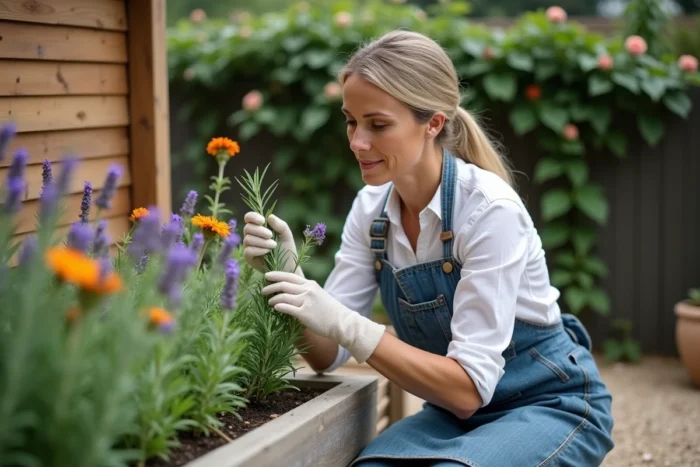
Prefectural watering restrictions multiply every summer in a majority of French departments. This reality changes the game for anyone wishing to create a garden that is both beautiful and easy to maintain. Starting from the constraints of the land, rather than a catalog of plants, helps avoid costly mistakes in time and water.
Soil and exposure: the diagnosis that conditions the entire garden
Before choosing any plants, the first task is to observe the land for several weeks. Where does water stagnate after rain? Which areas remain dry even in winter? Which section receives direct sunlight in the afternoon during the height of summer?
These observations guide the choice of plants much more effectively than a generic list of “easy plants.” Clay soil that retains water is not suitable for the same species as sandy, draining soil. Ignoring this means planting randomly, then compensating with excessive watering or frequent replacements.
A simple test at the back of the garden is enough: dig a hole about thirty centimeters deep, fill it with water, and observe the rate of infiltration. If the water disappears in less than an hour, the soil drains quickly and drought-tolerant plants will thrive. If it stagnates for several hours, it’s better to turn to plants suited for wet conditions or improve drainage.
This free diagnosis avoids years of frustration, and Déco et Jardin’s advice helps to complement it with concrete landscaping ideas tailored to each configuration.
Water restrictions and resilient gardening: adapting watering to dry summers
Repeated drought episodes and summer watering restrictions force a rethink of water management in the garden. Relying on a traditional lawn that requires multiple waterings per week in summer becomes risky: during restrictions, the grass turns yellow, and all the work is lost.
Rainwater harvesting and localized irrigation
Installing one or more rainwater harvesting tanks is a worthwhile long-term investment. Drip irrigation significantly reduces water consumption compared to sprinkler watering, as water reaches the base of each plant directly, without surface evaporation.
Continuous mulching, recommended in ecological landscaping guides, complements this system. A thick layer of wood chips, straw, or fallen leaves retains soil moisture, limits weed growth, and gradually nourishes the soil as it decomposes.
- Mulch all bare surfaces with at least five centimeters of organic material, renewed once or twice a year
- Prefer watering early in the morning or in the evening to limit evaporation
- Group plants by water needs (hydrozoning) to avoid overwatering drought-tolerant species to satisfy the thirstier ones
Drought-tolerant plants and persistent ground covers
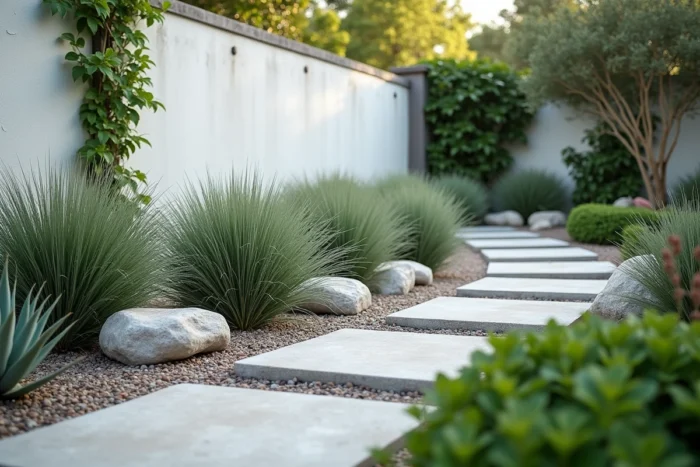
Replacing part of the lawn with persistent ground covers (thyme, sedum, yarrow) drastically reduces mowing and watering. These plants withstand heat, remain green or flowering for a large part of the year, and require almost no maintenance once well established.
Ornamental grasses add volume and movement without requiring regular watering after the first year of rooting. Miscanthus, stipa, blue fescue: they structure a flower bed and remain decorative even in winter when their spikes dry on the stem.
Zero waste in the garden: reducing maintenance by closing the material cycle
Most articles on easy gardening focus on plant or material selection. They overlook a powerful lever: systematically reusing the green waste produced by the garden itself.
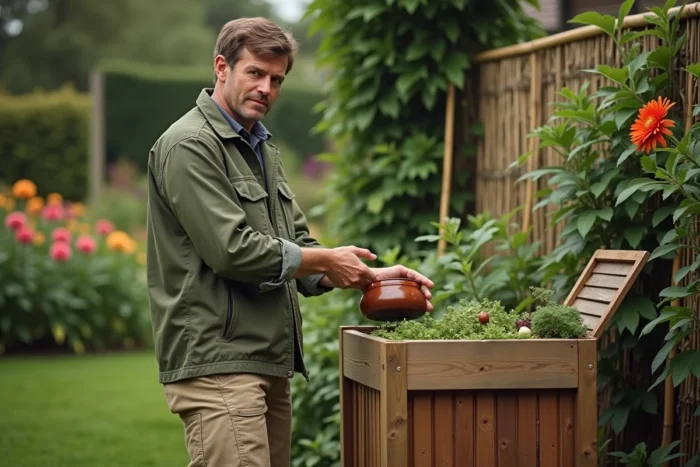
Grasscycling involves leaving grass clippings in place. They decompose in a few days and return nitrogen and organic matter to the soil. Leaf cycling follows the same principle with fallen leaves in autumn: instead of collecting and disposing of them, they are shredded with the mower and left in place or spread as mulch in the beds.
This circular approach reduces trips to the dump, eliminates the need for chemical fertilizers, and improves soil structure season after season. A garden that recycles its own waste requires fewer external inputs and gains autonomy.
Durable materials and structuring outdoor space
An easy-to-maintain garden also relies on the choice of non-vegetated surfaces. Paths, borders, and terraces, when well thought out, reduce weeding areas and channel movement.
- Stabilized gravel on geotextile limits weed regrowth while allowing water to infiltrate, unlike concrete which promotes runoff
- Clear borders between lawn and beds eliminate the time spent manually defining the edges each season
- Natural stone or composite slabs laid on a sand bed require no joints to redo or annual treatment
Landscaping benefits from being thought out in usage zones. A relaxation area close to the house, a more wild open space at the back of the garden, a functional passage between the two. Each zone has its defined maintenance level from the design stage, avoiding the “uniform garden” effect where everything requires the same effort everywhere.
Mixed beds and staggered blooming without constant intervention
A garden can remain in bloom from spring to autumn without seasonal replanting, provided that mixed beds are composed of perennials, shrubs, and bulbs with staggered flowering times. The goal: that at every time of year, at least one layer is in bloom or has decorative foliage.
Perennials like hardy geraniums, nepeta, or echinacea bloom for a long time and only require annual pruning at the end of winter. Combined with spring-flowering shrubs (lilacs, mock orange) and grasses that take over in summer, they form a self-sustaining ensemble.
The planting density naturally limits weeds by covering the soil. A well-filled bed from the start requires significantly less weeding than a sparse bed where light reaches bare soil.
Designing a beautiful and easy-to-maintain garden is not a paradox. The real work happens upstream, in diagnosing the land, choosing plants suited to local conditions, and establishing a material circuit that self-sustains. Once this framework is in place, the time spent in the garden shifts from a chore to observation.