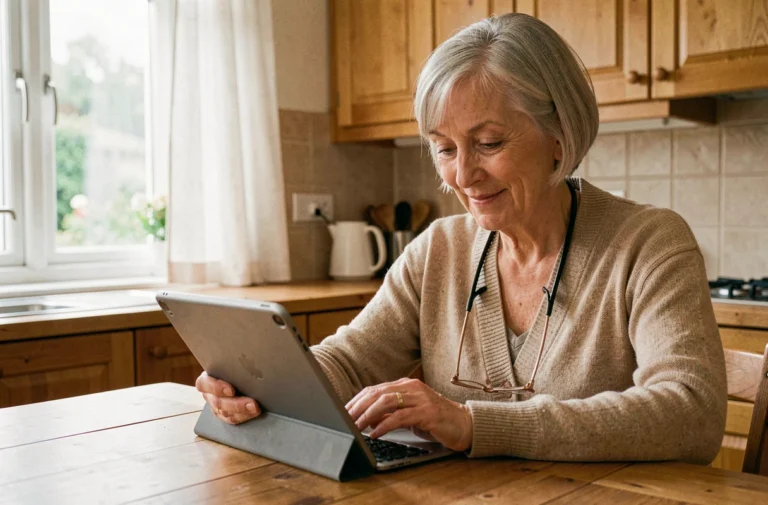
Getting back into sports after a long break, losing weight sustainably, preparing for a race: these goals have one thing in common. They require a program tailored to your body, not to that of a stranger in a YouTube video. A home personal trainer builds this program taking into account your real constraints and corrects your movements in real-time. This is the difference between just moving around and making progress.
Periodization and Adjustment: What a Generic Program Doesn’t Do
Have you ever followed a training plan found online for three weeks and then given up? The problem rarely comes from a lack of willpower. It stems from the program itself, which is rigid and unable to adapt to your daily fatigue, a knee pain, or a busy work week.
A home personal trainer applies a principle that physical trainers use in competition: periodization. Specifically, each session is part of a cycle with phases of increasing load and recovery. Your trainer observes your reactions, measures your progress, and modifies the exercises from one session to the next.
Let’s take a simple example. You want to strengthen your back to reduce lower back pain. An online program will suggest the same exercises for four weeks. A trainer, on the other hand, will start by assessing your hip mobility and the strength of your deep abdominal muscles.
They will adjust the difficulty based on your feelings, not according to a predetermined schedule. Specialized platforms list professionals who work according to this logic, such as https://www.moncoachadomicile.com/ which connects you with certified trainers who come directly to your home.
Degree and Professional Card: Check Before Signing
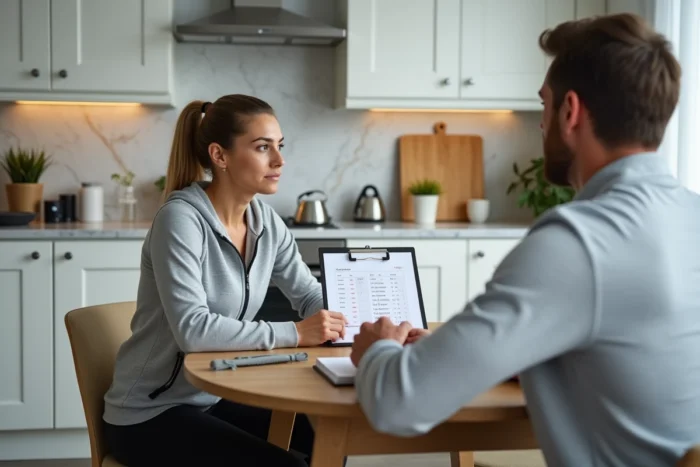
Why does this point come before motivation or time savings? Because poorly supervised sports coaching can lead to injuries. In France, supervising a sports activity for payment requires a recognized degree: BPJEPS, CQP Fitness Instructor, DEJEPS, or STAPS License.
The trainer must also hold a professional sports educator card, renewable every five years. This card guarantees that the professional is up to date with their qualifications and insurance. Practicing without this card is an offense.
Before entrusting your physical health to someone, ask to see this card. It has a verifiable number. This simple reflex protects you against self-taught individuals who claim to be trainers after watching tutorials.
- Check that the degree corresponds to the proposed activity (a BPJEPS with a fitness mention does not cover specific physical preparation for a combat sport, for example).
- Ask for the professional card number and verify it on the Ministry of Sports website.
- Ensure that the trainer has professional civil liability insurance covering home sessions.
Home Personal Trainer and Real-Time Movement Correction
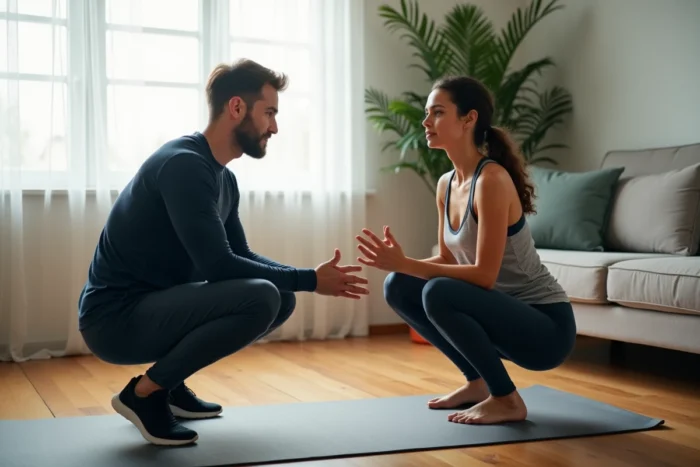
The majority of injuries related to amateur sports do not occur due to excessive effort. They arise from repeated poor positioning dozens of times. A squat with knees caving in, a plank with a sagging pelvis: these mistakes go unnoticed when training alone.
Immediate movement correction is the first lever for injury prevention. The trainer observes your posture from several angles, adjusts the position of your feet, shoulders, and pelvis. They can also use tactile cues (placing their hand in a specific spot to help you understand the movement).
This correction has a second effect. It makes each repetition more effective. A properly executed bench press engages the pectorals more than a sloppy movement with a heavier load. Better to do ten clean repetitions than thirty rushed ones.
The Advantage of Home Over the Gym for Technique
In the gym, even a good trainer must share their attention among several people. At home, the ratio is one-on-one. The entire session is dedicated to your movements, your compensations, your progress. This exclusive attention significantly accelerates motor learning.
Hybrid Format: Home, Outdoors, and Video Calls Depending on the Weeks
The offer of home personal training is no longer limited to sessions in your living room. A recent trend shows that many trainers now offer hybrid formats combining home sessions, outdoor training, and follow-ups via video conference.
Are you going on a business trip? The trainer sends you a session adapted to do in a hotel room, with video follow-up. Want to run? The next session takes place in a park, focusing on stride work and interval training.
This mix of formats solves a classic problem: boredom. Repeating the same exercises in the same place eventually erodes motivation. Alternating environments maintains engagement and allows for working on different physical qualities (balance on uneven terrain, endurance outdoors, strengthening at home).
Tax Advantage on Home Coaching Sessions
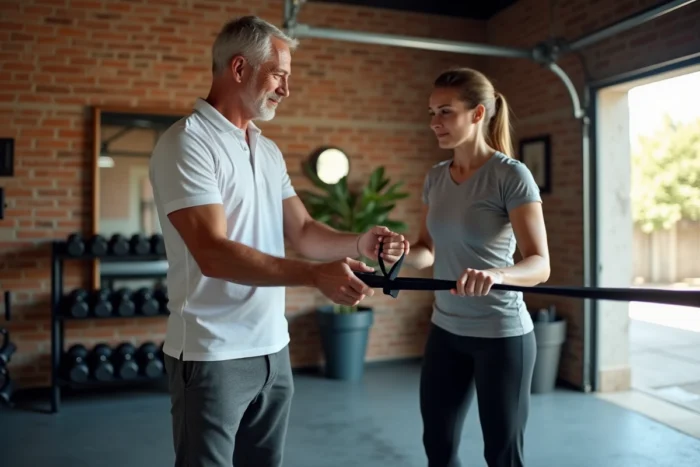
Home personal training falls under personal services. This means that sessions qualify for a tax advantage. The system allows you to deduct part of the expenses from your income tax or receive a tax credit if you are not taxable.
To benefit from this, two conditions must be met:
- The trainer works directly at your home (sessions outdoors or via video alone are not eligible).
- The service is provided through an approved personal services organization, or the trainer is registered as such with the DIRECCTE.
This tax lever significantly reduces the actual cost of coaching. Many people compare a trainer’s gross rate to a gym subscription without factoring in this reduction. The calculation after the tax advantage often changes the game.
Home personal training is not a luxury reserved for experienced athletes. It is a structured framework, regulated by law, that transforms scattered sessions into measurable progress. Check the degree, demand the professional card, and choose a format that fits your lifestyle. The rest is the trainer’s job.