
The majority of French households that reduce their meat consumption do not identify as vegetarians. According to the 2024 barometer from Protéines France and Terres Univia, 31% of French people declare themselves flexitarians. Cooking vegetarian does not imply a radical change, but rather a gradual reorganization of weekly meals, with meatless dishes integrated into a mixed diet.
Plant Proteins in the Kitchen: Beyond Tofu and Lentils
The vegetarian recipes circulating online often rely on a limited repertoire: tofu, red lentils, chickpeas. While these ingredients remain solid staples, the range of plant proteins available for daily use is much broader.
Less publicized legumes (mung beans, split peas, flageolets) offer varied textures and adapt to both stews and cold salads. Eggs, often overlooked in discussions about vegetarian cooking, are a source of complete proteins, quick to prepare and compatible with a meat-free diet.
Those who wish to cook vegetarian with Myn Idee on mynidee.com will find concrete ideas to structure their meals around these ingredients, without limiting themselves to the most well-known recipes.
The French market for plant-based alternatives (minced products, nuggets, desserts made from pea or soy protein) has seen steady growth in recent years, according to Circana data analyzed by the Good Food Institute Europe. These ready-to-use products simplify the transition for beginner cooks, although their nutritional value varies from brand to brand. Feedback on this point is mixed: some dietitians recommend using them as a backup, not as a daily staple.
Organizing Vegetarian Meals for a Week
The main obstacle to transitioning to regular vegetarian cooking is not the taste, but the planning. A household accustomed to building its menus around meat or fish loses its central reference when these elements are removed.
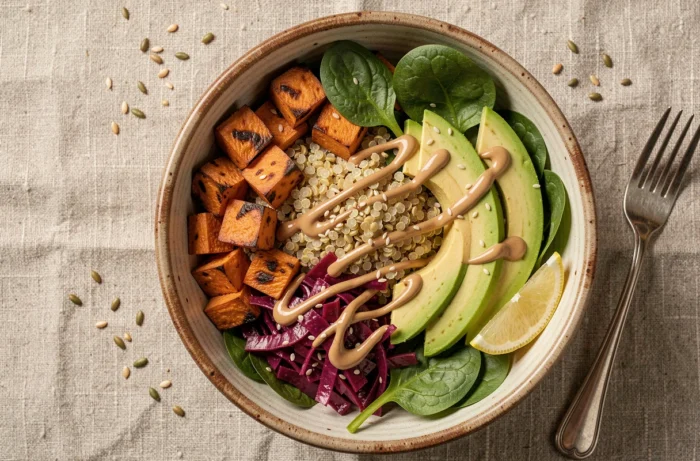
An effective method is to think in terms of ingredient families rather than recipes. Instead of searching for five different vegetarian dishes, one prepares a batch of cooked legumes, a whole grain (rice, quinoa, bulgur), and two or three roasted vegetables at the beginning of the week. These components can then be freely combined.
- Monday: rice bowl, roasted chickpeas, grilled zucchini, tahini sauce. Preparation in under fifteen minutes if the bases are ready.
- Wednesday: lentil patties made from the cooked batch, served in pita bread with raw vegetables and yogurt.
- Friday: vegetable gratin with the week’s leftovers, light béchamel, and grated cheese, beaten eggs to bind everything together.
Batch cooking reduces time spent in the kitchen by half compared to daily preparation from scratch. This approach works well for both flexitarian households and strict vegetarian diets.
Seasoning and Pantry Staples: What Makes the Difference
A bland vegetarian dish is not a recipe problem, but a seasoning issue. Meat naturally brings umami through the Maillard reaction. Without it, one must compensate for this depth of flavor in other ways.
Soy sauce, miso paste, parmesan (or a vegan equivalent), sun-dried tomatoes, and nutritional yeast are the pillars of a functional vegetarian pantry. A spoonful of white miso in a vegetable soup transforms a flat broth into something rich and complex.
Quality olive oil and balsamic vinegar are sufficient to enhance most salads and roasted vegetables. Investing in two or three high-quality condiments is cheaper than buying processed veggie products, and the results in the kitchen are more impressive.
Spices to Favor for Vegetarian Dishes
Cumin, smoked paprika, turmeric, and garam masala cover a wide spectrum of world cuisines. Indian, Mexican, and Middle Eastern vegetarian recipes rely almost entirely on these spices, combined with seasonal vegetables and legumes.
A piece of advice often overlooked in cooking blogs: toasting spices dry in a hot pan for thirty seconds before adding them to the dish releases their aromatic oils and doubles the flavor intensity. This simple technique radically changes the profile of a curry or dhal.
Nutritional Limitations to Watch for in Vegetarian Cooking
Cooking vegetarian on a daily basis covers most nutritional needs without difficulty, provided one varies the sources of plant proteins and does not limit oneself to starchy foods. However, certain micronutrients deserve special attention.
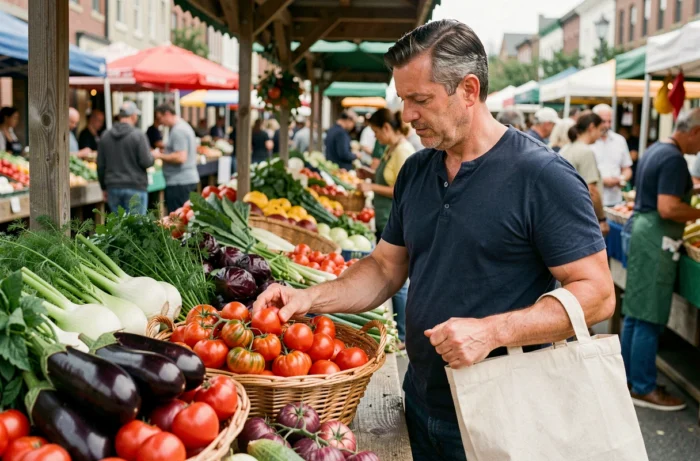
Non-heme iron (the one from plants) is less well absorbed than animal iron. Pairing it with a source of vitamin C (lemon juice on lentils, raw bell pepper in a bean salad) significantly improves its absorption. Vitamin B12 remains the only nutrient absent from the plant kingdom, which only concerns those who also exclude eggs and dairy products.
The available data do not allow us to conclude that a well-managed vegetarian diet presents systematic deficiencies. Reference books on plant nutrition simply recommend regular monitoring, especially during the first year of transition, to adjust intake if necessary.
Vegetarian cooking requires neither special talent nor a high budget. It relies on common ingredients, minimal organization, and a few seasoning reflexes that can be acquired in a few weeks of practice.