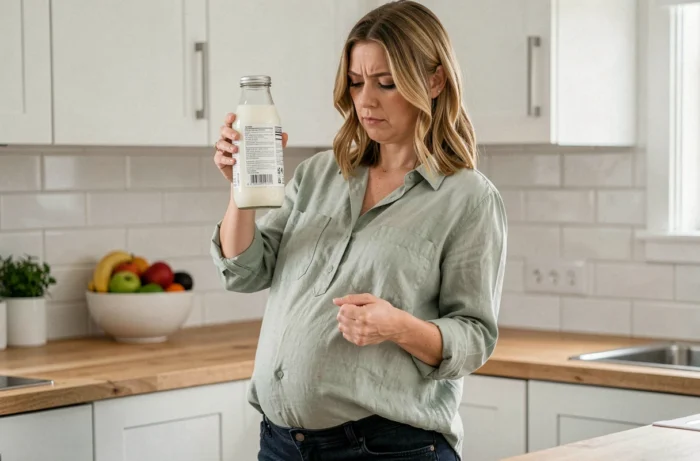
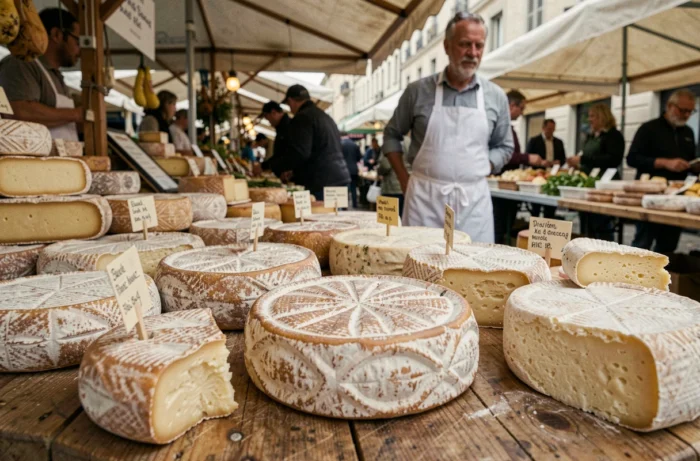
At the market, in front of a stall selling farmstead cheeses, the label doesn’t always say what type of milk was used. For a pregnant woman, this lack of information can turn an ordinary purchase into a source of uncertainty. Raw milk during pregnancy poses a real risk: the bacterium Listeria monocytogenes, which can survive in unpasteurized products, may cross the placenta and reach the fetus.
A pregnant woman’s immune system slows down to tolerate the fetus. This natural suppression of the immune system makes the body more susceptible to foodborne infections, particularly listeriosis.
How to identify a raw milk product before buying or eating it
For cheese sold in supermarkets, the words “raw milk” or “made with raw cow’s/goat’s/sheep’s milk” must appear on the packaging. You may also see “pasteurized milk” or “thermized milk” on the shelf, indicating that the milk has undergone heat treatment.
Understanding the risks of raw milk during pregnancy helps you ask the right questions when shopping, especially when faced with an artisanal product that has no detailed packaging.
The real blind spot is at the market, at a small producer’s stall, or in a restaurant. At a farm stall, cheese is often sold by the slice, without an individual label. In that case, asking the seller directly whether the milk is raw or pasteurized is the only reliable approach. A cheesemaker who makes their own cheese knows their process and can answer without hesitation.
Restaurant menus rarely specify the type of milk used. You can ask the server, but the answer depends on how familiar they are with the product. If you can’t get a clear answer, it’s best to avoid it or choose a dish where the cheese is cooked all the way through (a gratin, quiche, or pizza straight from the oven).
- At the supermarket: read the label and look for “raw milk” or “pasteurized milk” in the ingredients list or on the front of the package.
- At a market or artisan producer’s stall: ask the producer. A reputable professional will display this information or provide it readily.
- At a restaurant: ask the server. If they can’t give you a clear answer, choose a dish where the cheese is cooked at a high temperature.
- When traveling: labeling standards vary from country to country. If in doubt, avoid unwrapped local soft cheeses.
Listeria and pregnancy: what the bacterium can do
Listeriosis is rare in the general population, but pregnant women are much more vulnerable to it. Listeria monocytogenes can grow even at low temperatures, unlike most foodborne bacteria. Contaminated cheese kept in the refrigerator can still be dangerous.
In expectant mothers, the infection often causes mild symptoms: a moderate fever, aches and pains, and sometimes digestive problems. These signs can easily be mistaken for the flu, delaying diagnosis. The main danger is to the fetus: the bacterium can cause miscarriage, premature birth, or a severe neonatal infection (meningitis or sepsis).
The incubation period can range from a few days to several weeks. A pregnant woman who unknowingly ate a suspect product may not develop symptoms right away. That’s why, if you’re concerned after eating cheese that may have been made with raw milk, contacting your doctor or midwife can help arrange monitoring (temperature checks and, if needed, a blood test).
Cheeses that are safe to eat and those to avoid during pregnancy
The distinction isn’t simply between raw and pasteurized milk. The type of cheese also directly affects the risk of bacterial contamination.
Cheeses you can eat without particular restrictions
Hard, cooked-pressed cheeses such as Comté, Gruyère, and Emmental pose a very low risk. Their production involves heating the curds and aging the cheese for a long time, creating conditions that are unfavorable to Listeria, even when the cheese is made with raw milk. Parmesan also falls into this category.
Pasteurized, commercially produced fresh cheeses (mozzarella, ricotta, mascarpone, and fromage blanc) are safe to eat as long as they are kept refrigerated and consumed before the use-by date.
Cheeses to avoid
Soft cheeses made with raw milk carry the highest risk. Farmstead Camembert, Brie de Meaux, Mont d’Or, and raw milk Reblochon: their moist texture and rind (bloomy or washed) create favorable conditions for bacterial growth.
- Raw milk soft cheeses with bloomy rinds: farmstead Camembert, Brie de Meaux, artisanal Coulommiers.
- Raw milk soft cheeses with washed rinds: farmstead Munster, Pont-l’Évêque, artisanal Maroilles.
- Blue cheeses: Roquefort, Bleu d’Auvergne, and raw milk Fourme d’Ambert.
Also be careful with grated cheese sold loose or left open for several days: contamination can occur after opening, regardless of the type of milk originally used.
Cooking cheese during pregnancy: what temperature eliminates the risk?
Listeria monocytogenes is destroyed by heat. In practical terms, a thoroughly cooked tartiflette, raclette with melted, bubbling cheese, or pizza straight from a high-temperature oven is safe, even if the cheese was originally made with raw milk.
The risk comes from lukewarm dishes. Cheese simply placed on a hot dish without reaching a high enough temperature (a warm salad with barely browned goat’s cheese, or a slice of toast left under the grill for just a few seconds) may not be heated through enough to eliminate the bacteria.
As a rule of thumb, if the cheese is melted and bubbling, and the heat has reached the center of the piece, the dish is considered safe. The rind, however, can still pose a risk if it has only been lightly cooked, so you can remove it as a precaution.
What to do if you unknowingly ate raw milk cheese while pregnant
Sometimes you only realize afterward that cheese you ate at a friend’s house or in a restaurant was made with raw milk. The first thing to remember is that a single exposure does not automatically lead to infection. Contamination depends on whether the product actually contained the bacterium, which is statistically uncommon.
The steps to take are simple. Monitor your temperature over the following weeks and report any fever, even a mild one, to your doctor or midwife. A blood test can check for the bacterium if your symptoms warrant it.
There’s no need to panic, but don’t ignore it either. The key is to act quickly if you develop an unexplained fever—not to stop living normally for nine months.