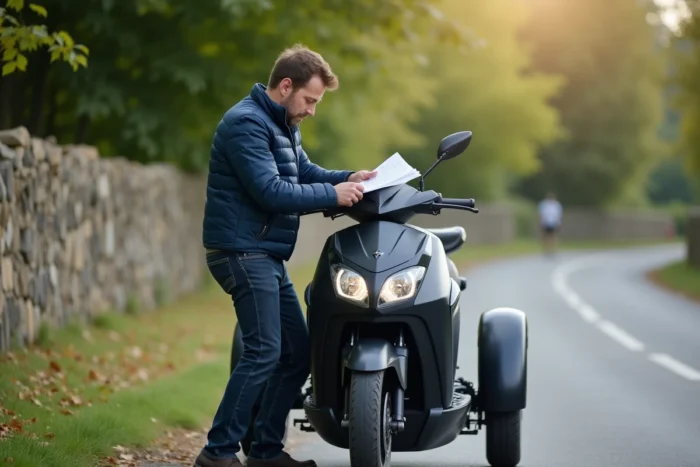
A trike is a motorized tricycle approved for road use, classified in category L5e under European regulations. Obtaining a compliant model in France requires adhering to specific standards, a regulated approval process, and, recently, new obligations related to the technical inspection of category L vehicles.
LR3 Standard and L5e Category: What Trike Approval Really Means
A trike approved in France meets the LR3 Category TM standard. This classification imposes a set of technical constraints without which the vehicle cannot be registered or insured.
The total weight must remain below the limit set by regulations. The two wheels mounted on the same axle must have a minimum width. The braking system must act simultaneously on all three wheels. The lighting must include a front position light, turn signals, and compliant position lights.
These requirements are not mere recommendations. A vehicle that does not comply with them is simply non-compliant, and therefore cannot be registered. This is why transformation kits with stabilizers, particularly those made in Portugal (which retain the original motorcycle’s rear wheel), are strictly prohibited in France. The modified vehicle does not correspond to any category in the two, three, and four-wheeled regulations. It is neither approved nor eligible for approval.
Riding with such a setup exposes one to a fine for driving a non-approved vehicle, and especially to a refusal of coverage by the insurer in the event of a claim. For those wishing to obtain a trike approved in France with Speeder, the process goes through a manufacturer or modifier who issues a certificate of conformity recognized by the French administration.

License B and 7-Hour Training: Conditions for Driving a Motorized Tricycle
Confusion persists regarding the license required to drive a trike. There are two access routes.
- License A (motorcycle) allows driving a trike without additional conditions, regardless of its power.
- License B (car), held for more than two years, permits driving a trike provided that a specific 7-hour training has been completed. Holders of a License B obtained from January 19, 2013, must also be at least 21 years old.
- An exemption from training exists for drivers who can prove they have driven a light motorcycle or a three-wheeled scooter between January 1, 2006, and December 31, 2010, upon presentation of an information statement from their insurer.
Outside of France, a License A is generally required. This point directly concerns drivers considering cross-border trips with their trike.
Power and Regulatory Distinction
French regulations distinguish between two categories of trikes based on their power. Below the threshold of 15 kW, the motorized tricycle remains accessible with a License B and the 7-hour training. Above 15 kW, the same conditions apply, but the minimum age requirement (21 years for post-2013 License B) becomes crucial.
This distinction impacts the choice of model. A trike based on a Honda Goldwing or a Harley-Davidson far exceeds 15 kW, which necessitates checking its eligibility conditions before purchase.
Technical Inspection for Motorcycles and Trikes: The Timeline to Know Before Buying
Existing buying guides overlook a recent development. Since the implementation of technical inspections for category L vehicles, all registered trikes over 50 cm³ are affected.
The timeline is transitional. Vehicles registered between 2017 and 2019 must undergo their technical inspection in 2025, within four months of the registration anniversary date and no later than December 31, 2025. Those registered between 2020 and 2021 are affected in 2026, following the same principle.
Buying a used trike already registered in France therefore requires immediate verification of its technical inspection deadline. A vehicle whose inspection is not up to date cannot change ownership on the registration document. This is a concrete blockage point during resale.
What the Technical Inspection Checks on a Trike
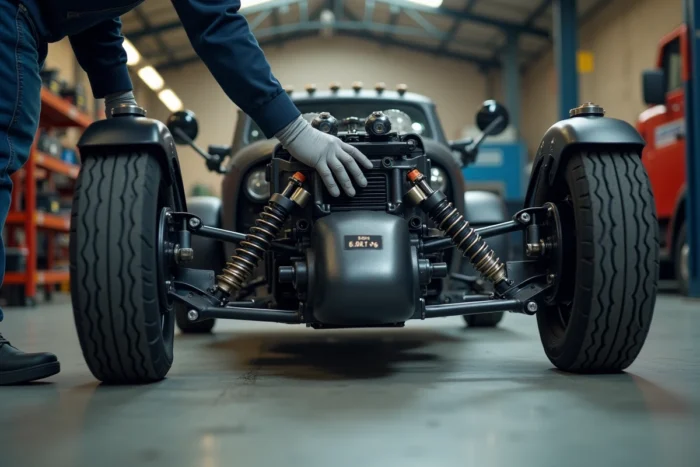
The inspection covers the same categories of points as for motorcycles: braking, lighting, steering, chassis structure, emissions. On a trike, the compliance of the transformation kit is also examined. A handmade or undocumented assembly without a certificate of conformity will be flagged as a critical failure.
Registration of an Imported Trike: Pitfalls to Avoid
Importing a trike from Germany, the United States, or another European country remains possible, but the administrative process differs depending on the vehicle’s origin.
For a used trike purchased within the European Union, the European Certificate of Conformity (COC) generally allows for direct registration with the ANTS. In practice, the vehicle must exactly match the manufacturer’s data, without modification. Any technical alteration compared to the approved version requires going through a single vehicle approval (RTI) with the DREAL.
For a trike from the United States, the RTI is mandatory. The vehicle must be physically presented, accompanied by its complete technical documentation. Timelines vary by regional DREALs, but expect several weeks between the submission of the file and the receipt of the approval report.
- Verify that the certificate of conformity matches the exact model of the vehicle, without modification.
- Request an information statement from the foreign seller to know the insurance and maintenance history.
- Anticipate the technical inspection immediately upon registration, according to the current transitional timeline.
A trike purchased abroad whose approval cannot be validated in France will remain stuck at the administrative stage. The attractive purchase price does not compensate for a vehicle immobilized without a registration document.
The trike market in France remains narrower than that of classic motorcycles. The distributed brands (Hannigan, Motor Trike, EML) go through a network of approved modifiers who ensure the vehicle’s compliance upon delivery. Following this route remains the most reliable method to ride quickly and legally.